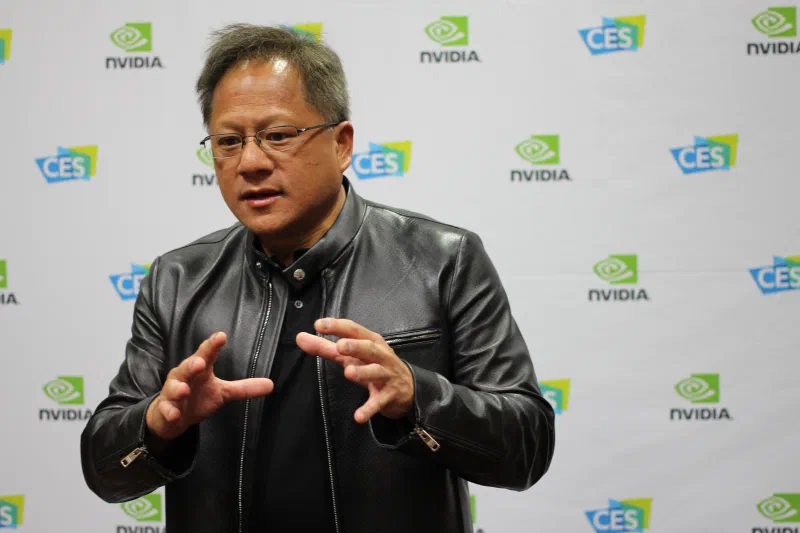
Cover: Jensen Huang, 5 January 2017. Photo: Maurizio Pesce · Source · CC BY 2.0. View full-size cover · 5184 × 3456.

Download the Chinese and English biography (Word)
Information cutoff: October 3, 2026.
This biography draws on school records, public interviews, company announcements, regulatory filings, and award organizations. Retrospective personal stories retain attribution to the speaker. The downloadable Chinese and English editions use the same reference numbers.
1 From Taiwan to the United States
- TaiwanBorn in 1963
- ThailandPart of his childhood
- WashingtonStayed with an uncle in Tacoma
- KentuckyBoarding and elementary school
- OregonReunited with his parents
Sequence of places recorded by Caltech; the exact early dates are approximate. Sources: Caltech · Oneida school newsletter.
Jensen Huang is also identified as Jen-Hsun Huang in earlier university and company records. Born in Taiwan in 1963, he spent part of his childhood in Thailand. Around age nine, he and his older brother moved to the United States before their parents. Caltech’s published biography records an initial stay with an uncle in Tacoma, Washington, followed by a move to Kentucky. He later reunited with his parents in Oregon as a teenager.[2]
He has often recalled his childhood stay at Oneida Baptist Institute in Kentucky. The school’s newsletter supplies a specific distinction: although the institute then operated principally as a high school, it allowed the young brothers to live on campus. They attended classes at nearby Oneida Elementary School. Their residence and the school where they took classes were separate institutions.[3]
Public accounts establish the sequence of places, but retrospective descriptions do not consistently agree on exact early dates and ages. This biography therefore uses approximate ages rather than turning an uncertain recollection into a precise date.
2 Boarding life in Kentucky
At the NBA All-Star Technology Summit on February 14, 2025, Huang told interviewer Becky Quick that he had shared a dormitory room with a sixteen-year-old boy while he was much younger. He recalled that other boys worked on a tobacco farm, whereas he cleaned bathrooms because he was the youngest. He described the work as difficult and said he tried to perform his assigned tasks well.[4]
These details come from Huang’s later recollection. The school independently records the brothers’ accommodation and elementary-school attendance.[3][4]
He remained connected to the institution. Its 2019 newsletter records a teaching and residential building supported by Huang and his wife, bringing a place from his childhood back into the documented account of his adult life.[29]
3 Oregon high school, table tennis and restaurant work
After rejoining his parents, Huang attended Aloha High School in Oregon. HKUST’s honorary doctorate citation records that he graduated at sixteen and had been a nationally ranked table-tennis player. The sport was table tennis, rather than tennis.[5]
He also worked at Denny’s, including washing dishes, clearing tables, and serving customers. NVIDIA’s 2023 retrospective records this employment and his return to the San Jose restaurant associated with the company’s founding for a commemorative event.[10]
4 University studies and family life
Huang studied electrical engineering at Oregon State University, receiving his bachelor’s degree in 1984. He earned a master’s degree in electrical engineering from Stanford in 1992. Oregon State’s alumni record notes that he completed his graduate studies while working full time; eight years separated the two degree dates.[6]
His wife, Lori Huang, formerly Lori Mills, is also an Oregon State graduate. The university’s 2022 engineering alumni magazine records that they met as laboratory partners in a first-year engineering course and married a few years later.[7]
They have a son, Spencer, and a daughter, Madison. Huang recalled in 2010 that he continued taking Stanford classes while working, married, and raising children. His course load decreased after the children were born. He continued because he enjoyed studying and completed the master’s degree over eight years.[36]
5 An engineer at AMD and LSI Logic
BIOGRAPHY MAP
Education, work and public milestones
Explore the institutions, roles and events documented in this biography.
Read the full text outline
- Jensen Huang
- Education
- School years
- Oneida Elementary · classes
- Oneida Baptist Institute · boarding
- Aloha High School · Oregon
- Earned university degrees
- Oregon State · electrical engineering B.S., 1984
- Stanford · electrical engineering M.S., 1992
- School years
- Semiconductor employment
- AMD · microprocessor designer
- LSI Logic · director of CoreWare
- NVIDIA · since 1993
- Co-founder with Malachowsky and Priem
- President, CEO and director
- NVIDIA milestones during his tenure
- Public listing and graphics
- 1999 · Nasdaq IPO
- 1999 · GeForce 256 release
- Parallel computing and AI systems
- 2006 · CUDA architecture unveiled
- 2016 · DGX-1 announced; delivery to OpenAI
- 2024 · Blackwell announced
- Public listing and graphics
- Education gifts
- Universities
- Stanford · Huang Engineering Center
- Oregon State · Collaborative Innovation Complex
- HKUST · Top Engineering Scholars Award
- School campus
- Oneida · Jen-Hsun Huang Hall
- Universities
- Education
Branches organize documented facts. NVIDIA products were developed by company teams; the map does not assign their invention to one person. Gift donors and amounts are detailed in Chapter 14.
Sources: NVIDIA: Jensen Huang executive biography · Oneida Baptist Institute: July–August 2018 newsletter · HKUST: 2024 honorary doctorate citation · Oregon State: Huang Engineering Hall of Fame biography · Stanford Technology Ventures Program: Huang biography · NVIDIA: corporate history timeline · NVIDIA: DGX-1 launch announcement, April 5, 2016 · NVIDIA: DGX-1 delivery to OpenAI, August 2016 (republication archive) · NVIDIA: Blackwell platform announcement, March 18, 2024 · Stanford: fiscal 2008 financial review, Huang gift commitment · Oneida Baptist Institute: Fall 2019 On Campus newsletter · Oregon State: $50 million Huang gift, October 14, 2022 · HKUST Engineering: Top Engineering Scholars Award gift, September 2, 2025. Reviewed 2026-10-03.
Before founding NVIDIA, Huang worked at AMD and LSI Logic. Stanford’s entrepreneurship program records his roles as a microprocessor designer at AMD and director of CoreWare at LSI Logic, positions in semiconductor design and related technology operations.[8]
NVIDIA’s other founders were Chris Malachowsky and Curtis Priem. Before the startup, they worked at Sun Microsystems while Huang worked at LSI Logic.[8][12]
By the time he completed his master’s degree in 1992, Huang had already worked in industry. His earned academic qualifications when he began the company were a bachelor’s and a master’s degree in electrical engineering. His later honorary doctorates were honors conferred by universities.[1][6]
6 Three founders in 1993
NVIDIA’s official history gives April 5, 1993, as its founding date and names Huang, Malachowsky, and Priem as the founders. Its initial focus was three-dimensional graphics for gaming and multimedia. Huang has served as president, chief executive officer, and a director since the company’s inception.[1][9]
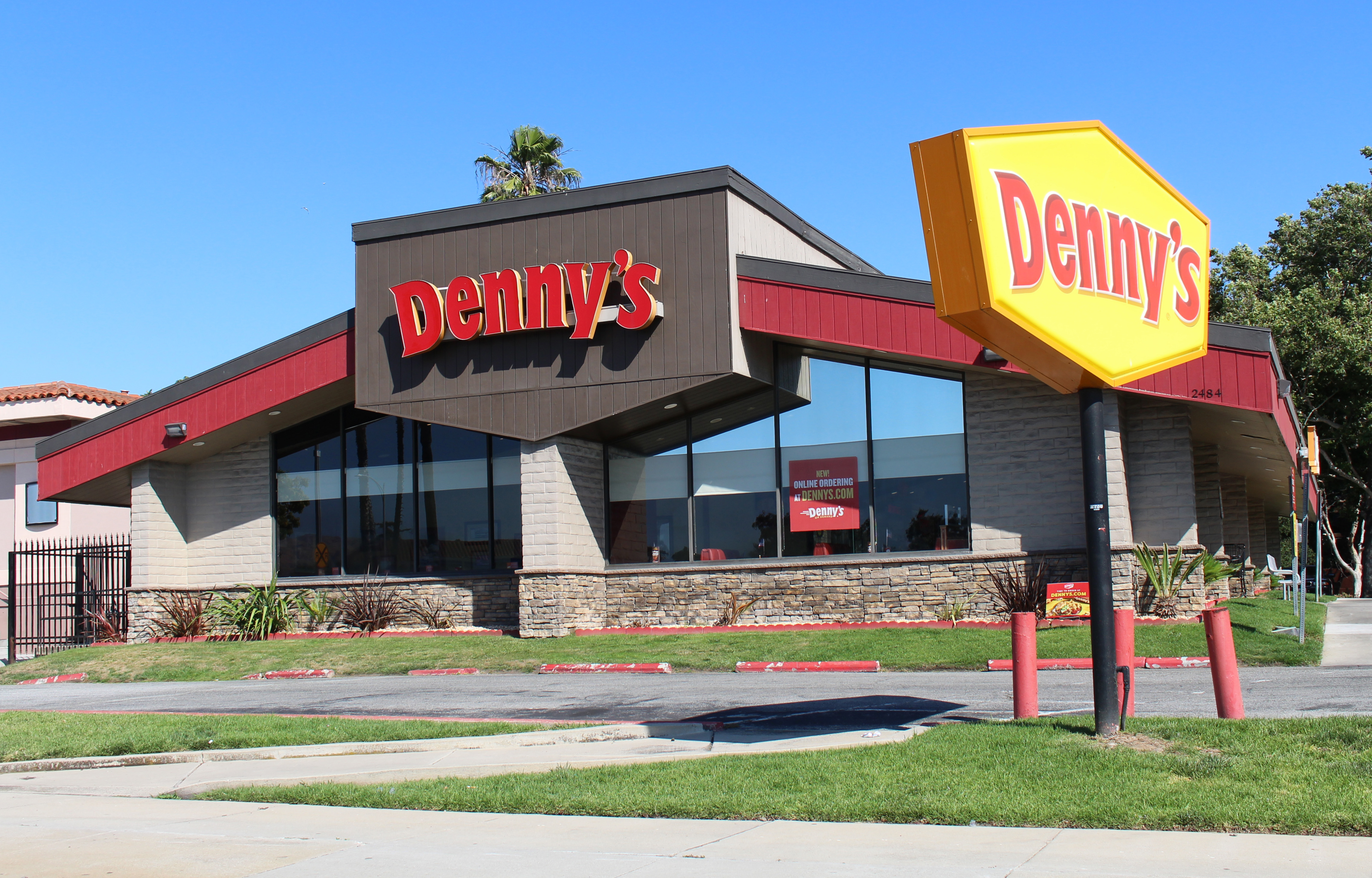
The Denny’s restaurant at 2484 Berryessa Road in San Jose, associated with NVIDIA’s founding discussions. Photographed on 2 July 2023.
Photo: Coolcaesar · Source · CC BY-SA 4.0.
View full-size photo · 4568 × 2924
Some pre-founding discussions took place at a Denny’s restaurant in San Jose, California. NVIDIA returned to the restaurant for a commemorative event in 2023. The restaurant was a meeting place; incorporation, financing, hiring, and product development involved additional steps.[10]
In an April 2009 Stanford eCorner talk, Huang recalled treating his thirtieth birthday, February 17, 1993, as his first day working on the startup. He had not taken business or marketing classes and bought startup books and prepared financing presentation materials.[11]
He also recalled hiring a lawyer who introduced the founders to venture investors. Investors considered their work history, qualifications, and market opportunity. The team began building the company without first completing a detailed business plan. These details come from his account of its first few months.[11]
Huang took the CEO role, but the enterprise was founded by three partners. Subsequent chips, software, and systems were developed by engineering teams.
7 NV1, NV2 and the early product reversal
NVIDIA’s first commercial chip, NV1, entered the market in 1995. The company’s IPO prospectus states that it stopped selling NV1 in the first quarter of 1996 and abandoned NV2 development. RIVA 128, introduced in August 1997, used a subsequent graphics architecture.[13]
In Sequoia’s interview, Huang recalled that the original graphics approach diverged from the interfaces and architecture adopted by the broader market. He described asking Sega to release NVIDIA from an ongoing development arrangement. In his account, Sega agreed to relieve the contractual obligation while paying the original contract amount.[12]
This negotiation story is a participant’s later recollection. The biography does not treat every contractual detail, date, or payment as separately verified by the prospectus. The prospectus directly establishes the sequence of NV1 discontinuation, NV2 abandonment, and RIVA 128’s introduction.[12][13]
As CEO, Huang participated in handling the product direction and customer relationship. The company was still private during this period, which included the discontinuation of its first product and cancellation of its next project.
8 The 1999 IPO and GeForce 256
NVIDIA went public on Nasdaq on January 22, 1999, under the ticker NVDA. Its investor FAQ gives an original IPO price of $12 per share, before subsequent stock-split adjustments.[14]
That year, NVIDIA introduced GeForce 256 as a GPU. Its anniversary retrospective records October 11, 1999, as the release milestone and describes hardware transform and lighting that shifted graphics-processing work from the CPU.[15]
The IPO and the product release were distinct events: one brought the company into the public capital markets; the other was a processor development. Both occurred during Huang’s tenure, with the product’s engineering performed by company teams.
9 CUDA and general-purpose parallel computing
NVIDIA’s corporate history records the unveiling of CUDA architecture in 2006. CUDA provided a route for developers to program parallel computations on GPUs, extending their use beyond graphics rendering into scientific and other computing tasks.[9][16]
GPUs can execute large numbers of suitable calculations in parallel, but applications still require programs, tools, and algorithms. NVIDIA’s CUDA developer materials provide tools, libraries, and programming resources. The company’s work at this stage included both processor hardware and software support.[16]
Huang continued as CEO. CUDA is a technology platform developed and maintained by NVIDIA teams.[1][16]
10 Deep learning and computing systems after 2012
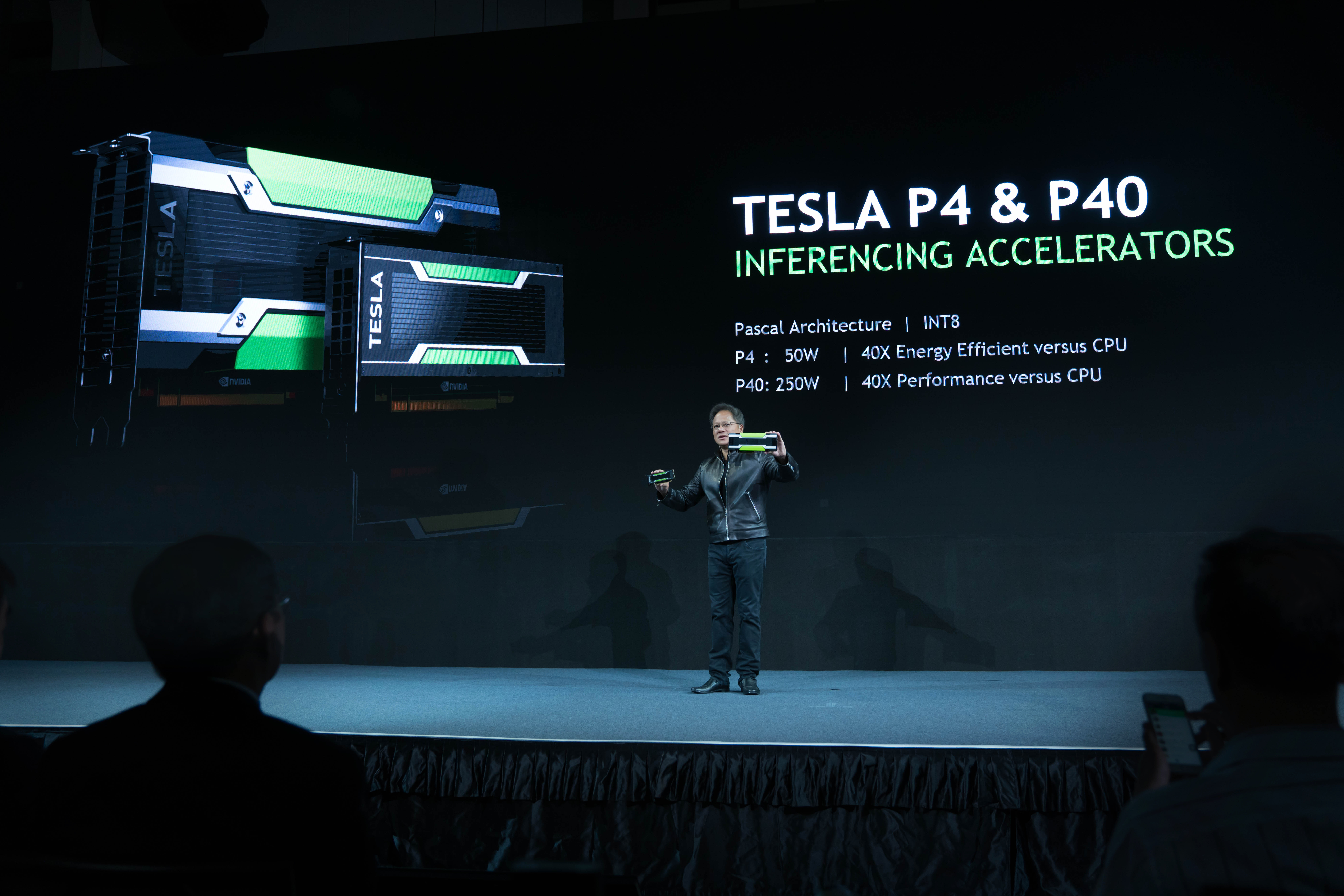
Jensen Huang at GTC Taiwan on 21 September 2016. The stage display shows the Tesla P4 and P40 inference accelerators.
Photo: NVIDIA Taiwan · Source · CC BY 2.0.
View full-size photo · 7952 × 5304
In 2012, Alex Krizhevsky, Ilya Sutskever, and Geoffrey Hinton published their image-classification neural-network paper. It describes using two NVIDIA GeForce GTX 580 GPUs and roughly five to six days to train the network. The architecture, training method, and experimental results were the researchers’ work.[17]
In April 2016, NVIDIA announced DGX-1, combining multiple GPUs and associated software in a deep-learning system. An August company account records Huang personally delivering a DGX-1 to OpenAI in San Francisco. These are product-launch and delivery events; the delivery alone does not establish that a later model was produced entirely on that machine.[18][19]
In March 2024, NVIDIA announced Blackwell, describing GPUs, CPU combinations, and networking components. Huang’s public product presentations thus involved chips and larger computing systems, as well as personal-computer graphics cards.[23]
11 Other events during his tenure
Early product reversals were not the company’s only difficulties. NVIDIA’s fiscal 2009 annual report disclosed a weak die/packaging material set in certain previous-generation notebook GPUs and related chips. The company recorded a $196 million charge for anticipated warranty, repair, return, replacement, and associated costs. This was a documented product-quality event during Huang’s tenure.[20]
On April 27, 2020, NVIDIA announced completion of its Mellanox acquisition, valued at approximately $7 billion. Mellanox’s businesses included networking technology, which became part of NVIDIA following the transaction.[21]
In February 2022, NVIDIA and SoftBank announced termination of NVIDIA’s proposed Arm acquisition, citing significant regulatory challenges that prevented completion. The acquisition did not close, and Arm did not become a NVIDIA subsidiary through that transaction.[22]
12 How he describes his management
Speaking at Stanford on January 29, 2003, Huang discussed corporate culture. He identified innovation, acknowledging mistakes, and self-criticism as elements of NVIDIA’s culture and argued that a CEO should devote time to it. These were the management views he expressed at that time.[24]
In a 2024 Stanford GSB interview, he described presenting employees with facts, data, assumptions, and unknowns, and explaining his reasoning. He said that fewer information-transfer layers and greater access to decision context helped employees make independent decisions. This is his description of his approach, rather than a survey of all employees’ experiences.[25]
In his November 23, 2024, HKUST conversation with Harry Shum, he again emphasized learning and accepting uncertainty. He said a leader need not know everything and could pursue a direction confidently while retaining room to learn. The university’s account preserves the discussion.[26]
In Stanford’s 2010 interview, he recalled feeling let down when a younger manager resigned while he was managing a design center at twenty-four. Years later, he considered his reaction mistaken and said he should respect colleagues’ freedom to choose other jobs.[36]
13 Public appearances and family roles
Leather jackets recur in Huang’s public appearances. HKUST’s account of its November 2024 event records Huang and Shum wearing jackets bearing the university’s name. A 2025 university donation announcement also records a charitable auction involving a jacket. The clothing appears in both event and fundraising records.[26][31]
His family also appears in company filings. NVIDIA’s 2026 proxy statement discloses that his son and daughter work at the company, are not executive officers, and do not report directly to him. It describes their compensation arrangements. Those disclosures do not establish a family succession plan.[35]
At this biography’s cutoff, NVIDIA’s official biography continues to identify Huang as a founder, president, CEO, and director. Product presentations are one part of his public work; the formal positions also involve ongoing management and board responsibilities.[1]
14 Four documented education gifts
Amounts retain their original currencies. Commitments, matching grants and announced gifts are identified individually.
Fiscal 2008
US$30 million
Stanford University
A commitment by Jensen and Lori Huang for the engineering center; the building was dedicated in October 2010.
Sources: Stanford: fiscal 2008 financial review, Huang gift commitment · Stanford Engineering: Huang Center dedication
2019 school newsletter
US$2 million
Oneida Baptist Institute
A matching grant from the couple for Jen-Hsun Huang Hall, with dormitory rooms and classrooms.
Sources: Oneida Baptist Institute: Fall 2019 On Campus newsletter
14 October 2022
US$50 million
Oregon State University
The announced gift from the couple to the university foundation for the Collaborative Innovation Complex.
Sources: Oregon State: $50 million Huang gift, October 14, 2022
September 2025
HK$10 million
HKUST
A matching gift from the Jen-Hsun and Lori Huang Foundation for the Top Engineering Scholars Award; Terry Tsang separately pledged HK$10 million.
Sources: HKUST Engineering: Top Engineering Scholars Award gift, September 2, 2025
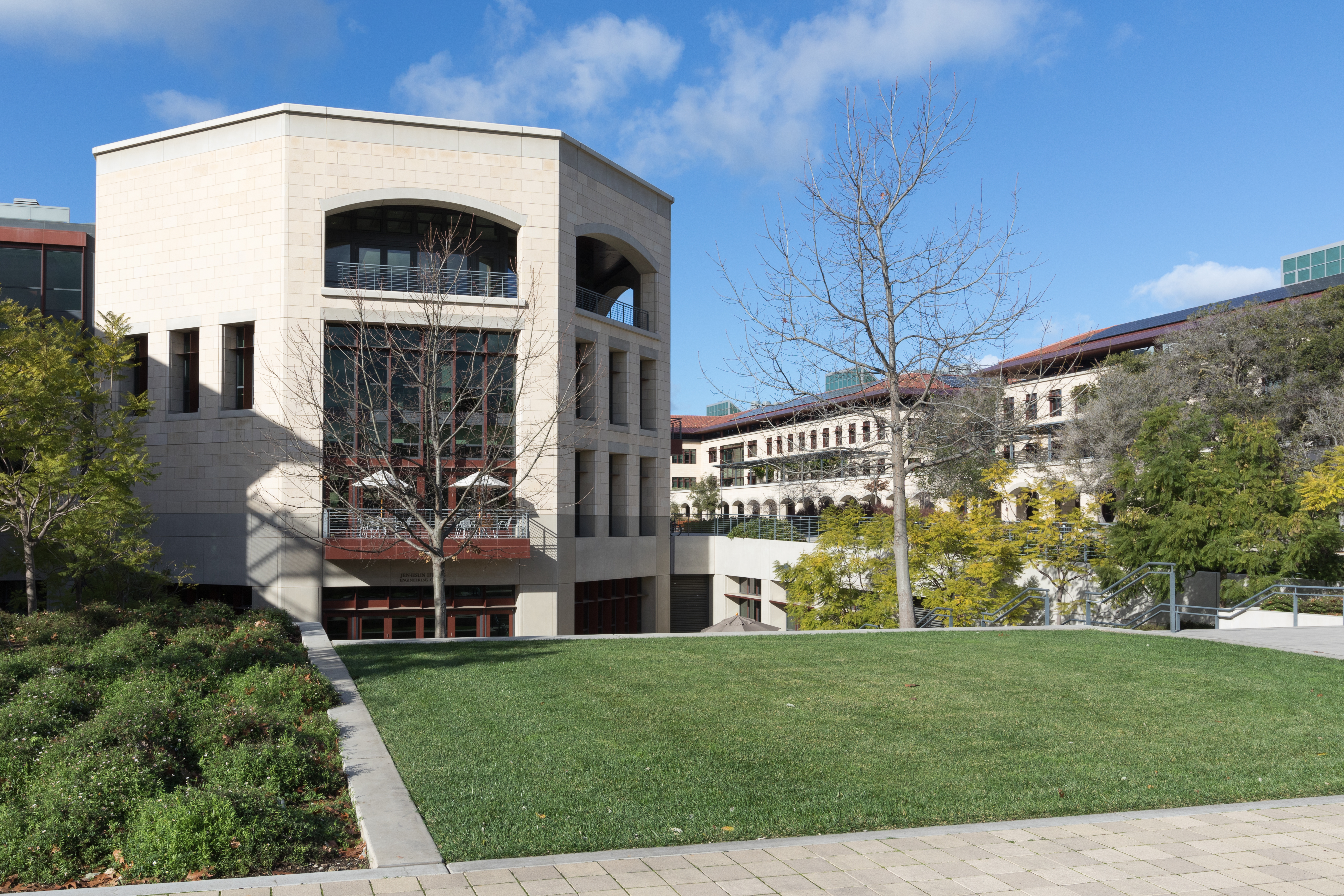
Jen-Hsun Huang Engineering Center at Stanford University, photographed on 16 December 2016. The dedication described in the text took place in 2010.
Photo: Frank Schulenburg · Source · CC BY-SA 4.0.
View full-size photo · 5247 × 3498
Stanford’s fiscal 2008 financial review records Huang and Lori’s $30 million commitment for the new School of Engineering Center. A separate engineering-school account records the dedication on October 5, 2010. The center bears the name Jen-Hsun Huang.[27][28]
Oneida Baptist Institute’s Fall 2019 newsletter records a $2 million matching grant from the couple for Jen-Hsun Huang Hall. The building contains thirty-two dormitory rooms accommodating up to 128 girls, plus twelve classrooms. It also records the first resident assistants serving in the building during the 2019–20 school year.[29]
On October 14, 2022, Oregon State announced a $50 million gift from the couple to the university foundation for the Jen-Hsun and Lori Huang Collaborative Innovation Complex. The announcement lists research in AI, materials science, and robotics. This account records the announced gift and purpose; the projected opening date in that announcement is not treated as a confirmed completion date.[30]
A September 2025 HKUST announcement records Terry Tsang’s HK$10 million pledge at a charitable event and a further HK$10 million matching gift from the Jen-Hsun and Lori Huang Foundation for the Top Engineering Scholars Award. These records distinguish the donors—individual, couple, or foundation—and the currencies involved.[31]
15 Honors, public responsibilities and the present
Huang entered Oregon State’s Engineering Hall of Fame in 2013. On November 23, 2024, HKUST conferred an honorary doctorate in engineering. University biographies also record his election to the US National Academy of Engineering.[5][6]
The 2025 Queen Elizabeth Prize for Engineering recognized seven modern-machine-learning laureates: Bill Dally, Fei-Fei Li, Geoffrey Hinton, John Hopfield, Huang, Yann LeCun, and Yoshua Bengio. The prize organization identifies Huang and Dally’s contribution with the hardware platforms supporting machine learning. Huang was one of seven recipients.[32]
Huang received the 2026 IEEE Medal of Honor at the April 24 ceremony in New York City. On March 25 of the same year, the White House announced his appointment to the President’s Council of Advisors on Science and Technology, whose role includes providing science and technology advice to the president.[33][34]
As of October 3, 2026, his public career continues. This biography records education, employment, founding, product events, philanthropy, and appointments already documented, without assigning a predicted ending to his career, wealth, or company.
Appendix Selected chronology
Personal events and NVIDIA milestones during Huang’s tenure. The chapters above provide the context and attribution.
- 1963
Born in Taiwan; later spent part of childhood in Thailand
Sources: [2]
- Around age nine
Moved to the US with his brother before their parents; later lived and studied in Kentucky
- 1984
Electrical engineering bachelor's degree, Oregon State
Sources: [6]
- 1992
Electrical engineering master's degree, Stanford
Sources: [6]
- April 5, 1993
Founded NVIDIA with Malachowsky and Priem
Sources: [9]
- August 1997
NVIDIA introduced RIVA 128
Sources: [13]
- January 22, 1999
NVIDIA's Nasdaq IPO
Sources: [14]
- 2006
NVIDIA unveiled CUDA architecture
Sources: [9]
- October 5, 2010
Stanford Huang Engineering Center dedication
Sources: [28]
- 2016
DGX-1 announced; Huang delivered a system to OpenAI
- October 2022
Huang and Lori's $50 million Oregon State foundation gift announced
Sources: [30]
- 2025
Queen Elizabeth Prize for Engineering shared with six other recipients
Sources: [32]
- March–April 2026
PCAST appointment and IEEE Medal of Honor presentation
Sources
- NVIDIA: Jensen Huang executive biography. Return to citation
- Caltech: 2024 commencement speaker biography. Return to citation
- Oneida Baptist Institute: July–August 2018 newsletter. Return to citation
- NBA: Huang interview transcript, Technology Summit, February 14, 2025. Return to citation
- HKUST: 2024 honorary doctorate citation. Return to citation
- Oregon State: Huang Engineering Hall of Fame biography. Return to citation
- Oregon State: 2022 Oregon Stater Awards magazine. Return to citation
- Stanford Technology Ventures Program: Huang biography. Return to citation
- NVIDIA: corporate history timeline. Return to citation
- NVIDIA: Huang returns to Denny’s, September 2023. Return to citation
- Stanford eCorner: The First Six Months of NVIDIA, April 8, 2009. Return to citation
- Sequoia Capital: Crucible Moments, NVIDIA, episode 8. Return to citation
- NVIDIA: initial public offering prospectus, 1999. Return to citation
- NVIDIA: investor FAQs, IPO date. Return to citation
- NVIDIA: GeForce 256 retrospective, October 11, 2024. Return to citation
- NVIDIA: CUDA developer documentation. Return to citation
- Krizhevsky et al.: ImageNet Classification with Deep Convolutional Neural Networks, 2012. Return to citation
- NVIDIA: DGX-1 launch announcement, April 5, 2016. Return to citation
- NVIDIA: DGX-1 delivery to OpenAI, August 2016 (republication archive). Return to citation
- NVIDIA: fiscal 2009 annual report. Return to citation
- NVIDIA: completion of Mellanox acquisition, April 27, 2020. Return to citation
- NVIDIA and SoftBank: termination of Arm acquisition, February 2022. Return to citation
- NVIDIA: Blackwell platform announcement, March 18, 2024. Return to citation
- Stanford eCorner: The Power of Corporate Culture, January 29, 2003. Return to citation
- Stanford GSB: Huang on first-principles thinking, April 25, 2024. Return to citation
- HKUST: Huang–Harry Shum fireside chat, November 23, 2024. Return to citation
- Stanford: fiscal 2008 financial review, Huang gift commitment. Return to citation
- Stanford Engineering: Huang Center dedication. Return to citation
- Oneida Baptist Institute: Fall 2019 On Campus newsletter. Return to citation
- Oregon State: $50 million Huang gift, October 14, 2022. Return to citation
- HKUST Engineering: Top Engineering Scholars Award gift, September 2, 2025. Return to citation
- QEPrize: 2025 Modern Machine Learning laureates. Return to citation
- IEEE: 2026 Medal of Honor ceremony account. Return to citation
- White House: PCAST appointments, March 25, 2026. Return to citation
- NVIDIA: 2026 proxy statement. Return to citation
- Stanford Engineering: Huang interview following the 2010 Huang Center dedication. Return to citation